Protecting Yourself Against Hostile Dogs
Story from PNN (Pet News Network):
We generally think of dogs as cuddly and friendly, ready to greet us withlicks and an excited wagging of the tail. However, not all dogs are like this. Some may be timid and shy, while others can be downright dangerous.
Dogs can act hostile or aggressive due to a number of reasons. They could be guarding their territory, or they may feel threatened, or they have been abused and don’t know how to react normally, or they could even be raised to hurt someone.
Here are some tips on how to avoid being harmed by a hostile dog:
•If you encounter a stray dog, remember that it may not respond to your commands. You can protect yourself by staying calm. You can attempt to command it to go away or behave. Do not show any fear and you must possess the aura of authority and confidence. But do not act in a threatening manner, either. Dogs have a tendency to follow if you command them in a modulated but firm voice.
•More often than not, pet dogs can become hostile if their owners do not pay them enough attention. They have a tendency to behave aggressively whenever they are faced with something that is new to them, such as strangers.
•If you have a pet dog, socialize it at a young age so that it will grow up to be a well-adjusted dog. Teach it not to react in a negative manner towards aggressive dogs since this will just excite them even more.
•Never run away from a hostile dog because this will only trigger its predatory instincts and make it want to chase you.
•Do not aggravate dogs by teasing them. They may look sedate and calm but this can turn to a desire to harm you if only to protect themselves.
•Do not make eye contact and try to stand sideways so that the dog will not feel further threaten.
•Fold your hands and press your elbows close to your sides to protect your vital organs and hands.
•If you are carrying an umbrella or a jacket, use it to distract an attacking dog. The dog may try to clamp on to the object rather than your limbs, giving you more time to try to remove yourself from the situation.
•If the dog should bite your leg or arm, try not to pry it away because this will just cause the wound to open up some more. You might need to wrestle with it anyway, in which case you will need to throw your weight at it and go for the throat or ribs to make it let go of you.
Photo: http://img.photobucket.com/albums/v348/lady.dragoness/Old%20Photos/stray_dog_closeup.jpg
To view this article in spanish, click here: http://www.petsintouch.com/pnnespanol/12694/protegiendote-contra-los-perros-agresivos
10 Urban Pet Myths
Although I keep hoping that its time will come, the Internet hasn’t done much to dispel some erroneous thinking on the subject of pet healthcare.
If anything, the Web is fueled by the kind of rumor mill sensibility that leads to even more misinformation on the subject of pet health and pet care. Case in point: the widespread willingness to believe that someone actually microwaved a pet to dry it off.
To that end, here’s my list of urban myths that drive me crazy!
1. A Cold, Wet, Dry or Warm Nose Tells Us Something
Although some pets’ noses might be capable of offering us some useful information, most of them do not — which is why veterinarians do not rely on this information at all when taking stock of a pet’s history and physical exam.
2. “Happy Pet” Behavior
People have a thing about assuming that pets are really happy when they exhibit certain behaviors, which can lead to all kinds of poor decision-making. A tail wag doesn’t always mean that a dog is pleased to see you. A stiff tail wag, in fact, is a sure sign that you should watch your step.
A purring cat is not always a content cat. If that were the case, my right arm wouldn’t be as scratched up as it is at the moment. After the owner of a new patient swore that her cat was a “purring angel,” I reached to pet her and got a sharp set of claws in response to my advance. She was purring though.
3. Bad Bloat Advice
Is there any large-breed dog disease that freaks owners out as much as gastric-dilatation volvulus (a.k.a. bloat)? Unlikely. This is probably why there’s so much misinformation about the disease all over the Web and in casual conversations. Does drinking cold water give a dog bloat? No. Does using a raised feeder decrease bloat? No.
If you are concerned about bloat at all, just talk with your vet.
4. Pet Mouths Are Cleaner Than Yours or Mine
Nope, but there are some caveats. After all, I’d rather be mauled by a dog than lightly bitten by a human with hepatitis C.
5. Purebreds Are Healthier Than Mutts
There’s been a lot of talk about this lately. Here’s the upshot: Purebreds are not necessarily healthier, because they are prone to more genetic diseases.
6. People Food Isn’t for Pets
In my opinion, this lie would have you believing any comestible that doesn’t come canned or kibbled is toxic, will make your pet fat or will automatically put you in the category of “bad pet parent.” The unspoken corollary to this message: You need a Ph.D. in nutrition to know how to feed your pets a balanced diet — unless you offer commercial food alone.
7. Pregnant Women Can’t Scoop Litter
I don’t mind if you claim to not be able to clean the litterbox for nine whole months, but it isn’t really true. Transmission of the organism that causes toxoplasmosis is not possible, as long as you scoop the poop daily, which is how you should do it anyway.
Don’t believe me? Here’s what the U.S. Centers for Disease Control and Prevention has to say on the subject.
8. Pets Need to Lick Their Wounds
Wound licking is great for pets if they’re simply getting debris off a fresh injury, but continuing to lick only exacerbates inflammation and infection. That’s why e-collars exist, and any licking of a surgical site is not a good thing — regardless of what you may have heard about the healing properties of dog saliva.
9. Cats Always Land Feetfirst
I can offer you plenty of examples of a cat who made a splat and broke bones. Cats will not always land on their feet if they don’t have enough time to relax and make a complete revolution in the air before landing, or if the surface they land on is irregular.
It should also be inferred from this myth-busting statement that cats do not have 9 lives.
10. Mothers Reject Animal Babies Who’ve Been Held by Humans
OK, some moms will take issue with your human aroma, but the vast majority of domesticated pets won’t give a rat’s backside whether you touch their babes or not. Wild animals might, but birds, for instance, have little way of knowing whether you’ve messed with their younglings, since their sense of smell is sorely lacking.
Takeaway points: Feel free to play with newborn puppies and kittens. Downed nests (or babies) should be replaced because they have a better chance of survival that way.
Veterinary Q&A: Dementia and senior dogs
Dr. Annie Chen-Allen, an assistant professor of neurology and neurosurgery at Washington State University’s College of Veterinary Medicine, answers this week’s questions about dementia in dogs. It is part of our series about the health issues facing aging dogs.
Question: What are the signs of senility?
Answer: Dogs with senility, otherwise known as canine cognitive dysfunction syndrome (CCDS), commonly have one or more of the five main symptoms: disorientation, interaction changes, sleeping-habit alterations, house soiling and activity-level alteration. This is otherwise known as DISHA.
Other behavioral changes include aggression, anxiety, sedated states, changes in eating habits and changes in sexual behavior.
Question: Are there different forms of senility? Does Alzheimer’s disease exist in dogs?
Question: There are not different forms of CCDS, but just different severity or degree of CCDS.
Alzheimer’s has not been proven in dogs, but there are neuropathologic lesions in dogs with CCDS that are similar to those seen in human Alzheimer’s patients.
Question: Are there tests to determine if a dog has dementia?
Answer: Unfortunately, there is not a definitive test to diagnose CCDS. It is diagnosed by excluding other diseases that can produce similar symptoms ‒ metabolic disorders such as kidney or liver disease and primary neurologic disorders, such as brain tumors.
It is most helpful when the owner can provide a thorough history that includes a detailed description of the behaviors the pet is exhibiting. Many CCDS researchers have questionnaires and other tools to help define the changes the owners observe at home.
Videotape of the behavior is also helpful because the animal is more likely to show changes in cognitive function at home than in the stressful environment of a vet clinic.
Advanced imaging can be a useful (although not a definitive) diagnostic tool for identifying the brain pathology in patients with CCDS.

Magnetic resonance imaging (MRI), in particular, is especially good at looking at brain tissues and identifying abnormalities in brain intensity, shape or symmetry.
In patients with CCDS, the brain may look smaller and asymmetric. The ventricles ‒ a normal structure in the brain that holds spinal fluid ‒ can also be enlarged. Other researchers have found the thalamus, a specific area in the middle of the brain, may be smaller in aged dogs with CCDS when compared with younger dogs.
While MRI may not be available or may be too costly for some owners, it is a necessary tool to rule out other causes of CCDS, such as brain tumors.
MRI becomes even more important for patients with presumed CCDS and concurrent abnormal neurologic examination because dogs with true CCDS should not have other neurological problem.
Therefore, having your pet evaluated neurologically would be an important step to making a diagnosis of CCDS.
Question: Is CCDS most common in senior animals, or can there be early onset cases?
Answer: Studies have shown that it is more common in patients older than 9 years, in females, neutered animals and smaller animals (weighing less than 33 pounds).
However, other studies have shown that CCDS prevalence increases with age, but sex and weight did not significantly impact the risk of developing CCDS.
Researchers have shown that the prevalence of CCDS is 14.2 percent in dogs aged 8 to 19.75 years.
Question: How do you separate the diagnoses of neuropathology and senility? Does your dog not respond to commands because it is deaf or because of a tumor or because of advancing senility? Is your dog having accidents in the house because of a physical problem or forgetfulness?
Answer: CCDS is still being researched, and there is not one definitive cause of these changes in aged dogs.
There now are several pathophysiologies that are the most supported in the literature, and some that are not yet proven to be consistent.
A protein deposit called amyloid has been found in dogs with CCDS. This protein has been pinpointed as being neurotoxic, causing brain cells to die. This similar pathology has been found in human patients with Alzheimer’s disease or dementia.
Other dangerous products, such as reactive oxygen species (ROS), can also lead to brain-tissue damage causing signs of CCDS. In Alzheimer’s disease and human-brain aging, ROS is also thought to play a large role in cognitive deficits.
Lastly, brain atrophy or shrinkage and larger ventricles have been implicated in causing cognitive decline in senior dogs.
The hippocampus, a part of the brain that is primarily responsible for memory, and the cerebral cortex, also responsible for memory and awareness, are the parts of the brain most severely affected by the atrophy/shrinkage.
The only way for you to tell if your dog is not responding to commands because it is deaf, has a brain tumor or has CCDS, would be to rule-out the other possible causes.
For deafness, a hearing test can be done by a neurologist. To diagnose a brain tumor, a MRI of the brain can be done. Once everything is ruled-out, then the likely diagnosis for the behavioral changes is CCDS.
If the dog is having accidents in the house, it would be important to rule out a urinary tract infection, kidney disease or brain tumor before deeming the dog as being forgetful because of senility.
 Thirteen-year-old Louie, right, stays busy pushing an interactive toy around the kitchen floor. As the toy bobs around, it dispenses treats.
Question: Can keeping a dog mentally active or “working” help it stay more alert and less likely to become senile?
Answer: YES!!!! The least invasive method for treatment of CCDS that has been advocated by researchers is environmental or enrichment therapy.
This mode of therapy can be used alone, but the patient is more likely to show improvement when this treatment option is completed in conjunction with dietary or supplemental (nutra- or pharmaceutical) therapy.
Enrichment therapies can consist of increased dog-human interactions, increased dog-dog interactions, frequent training sessions with owners, increased exercise, cognitive-enhancement toys or cognitive training/testing activities.
There also are toys that can improve the dog’s cognitive learning, such as puzzles/mazes with food rewards available at the finish and other toys that hide the food reward that can challenge the dog to problem solve to get to the treat.
Together these activities have been shown to improve not only the dog’s quality of life but improve cognitive function.
Question: What are the treatments for the various levels of senility?
Answer: Supplemental therapies for CCDS have been advocated by several research studies. Several products are available; each provides a different mix of vitamins, minerals, antioxidants and other cofactors.
Medium-chain fatty-acid supplements (composed of lauric, caproic, caprylic, capric acids) are believed to help with metabolism in the brain and improve attention, memory, spatial learning and executive function.
Phosphatidylserine has been shown to help with neurotransmitter release and receptor density in the brain for improved memory in affected animals.
Commercialized products are available for the client, such as Senilife® and Aktivait®.
Alternatively, there is also a prescription medication called selegiline (Anipryl®). This medication selectively and irreversibly inhibits certain enzymes that lead to increased levels of certain neurotransmitters (or chemicals) in the brain, which can improve cognitive function. Selegiline also can inhibit ROS in the brain, which can prevent brain damage associated with aging.
This medication does have potential side effects, such as allergic reaction, headache, restlessness, agitation, irritability, sweating, convulsions, uncontrollable or irregular movements, drowsiness, nausea, abdominal pain or diarrhea, insomnia, mild confusion, agitation or anxiety, or dry mouth.
In addition, serious side effects, such as serotonin (a neurotransmitter) sickness, could occur if given concurrently with other antidepressant medications. Signs of serotonin sickness include altered mental status, agitation, rhythmic muscle movements, stiffness, tremors, diarrhea, incoordination and fever.
Question: What about diet?
Answer: One of the easier methods of treatment available for CCDS is a strict dietary change for the pet.
Hills’ Prescription Diet® b/d® (Canine Aging & Alertness Diet) is a product available through veterinary clinics that can supplement the affected pet with vitamins, minerals, antioxidants, fatty acids and other cofactors. This formulation is a balanced and complete diet for the pet that provides nutrients for the rehabilitation of brain function while offering a formula appropriate for senior pets with other potential organ dysfunction occurring simultaneously.
While this therapy may be feasible for some clients, it may be too costly for all owners.
Question: What advice do you give owners with an older animal who is becoming confused?
Answer: To have their pet evaluated by a veterinarian to rule-out other medical issues that can cause similar behavioral changes. A thorough physical exam, neurologic exam and blood work including urinalysis should be performed regularly. If neurologic abnormalities are found on the neurologic exam, a MRI of the brain may be needed to rule-out a brain tumor.
To keep animals active both physically and mentally by increasing human-dog and inter-dog interactions.
If CCDS is diagnosed once ruling out other disorders, increased environmental enrichment used in conjunction with dietary, nutraceutical, and/or pharmaceutical therapies can be useful to lessen or slow cognitive dysfunction long-term.
Dog Hip Dysplasia
Quick Facts from a Veterinarian
Jennifer Hawkins, DVM

In more than 10 years of clinical practice, I’ve seen many dogs, in all shapes and sizes, come in for an examination because of “slowing down” or “trouble jumping”.
Often, pet owners attribute these symptoms to old age, but they can be an indication of something quite treatable, such as orthopedic changes associated with canine hip dysplasia.
What is Hip Dysplasia?
The word “dysplasia” literally means abnormal growth. Thus hip dysplasia refers to abnormal growth, or development, of the hip joint. This abnormal development is hereditary and can lead to discomfort, inflammation, lameness and arthritis in dogs.
How Hip Dysplasia Occurs in Dogs
The hip joint is a classic “ball and socket” joint in which the head of the femur is the “ball” and the cup-shaped acetabulum bone of the pelvis is the “socket”. In a normal hip joint, the socket should cover approximately 60% of the head of the femur. Thus, as the femur moves forward and back, as well as in and out, it is always kept in its appropriate position by the acetabular cup.
In dogs with hip dysplasia, this cup is shallow, leaving the head of the femur poorly covered. The femoral head thus will have freedom to move more than it should. As a result, the head of the femur will slowly change its shape in order to adapt to the abnormal forces being placed on it. Eventually, the femoral head may become knobby and flattened. Over time, pain and arthritis set in. Symptoms include intermittent lameness, difficulty rising and exercise intolerance. These symptoms may be very mild to severe depending on each patient.
Small and medium sized dogs are also commonly affected with hip dysplasia.

How is Hip Dysplasia Diagnosed in Dogs?
Dogs afflicted with hip dysplasia typically show symptoms either prior to 2 years of age or in their senior years. Often, signs are undetectable prior to becoming seniors when arthritis develops and owners note challenges with rising after rest, jumping and vigorous exercise.
Diagnosis of hip dysplasia can be performed by your veterinarian as early as 6 months of age. This is done by taking an X-ray of the hip joints. Often, veterinarians will administer a mild sedative to allow the dog to relax and be pain free for the positioning needed to take these diagnostic X-rays. Evaluation of the degree of coverage of the femoral head (ball) by the acetabulum (socket) is used to determine the presence of hip dysplasia.
How is Hip Dysplasia Treated in Dogs?
After a diagnosis of hip dysplasia is made, your veterinarian may wish to start your dog on medications to decrease inflammation and pain. In dogs with severe hip dysplasia, surgery may be recommended. In young dogs, a surgery to change the angle and coverage of the femoral head by the acetabular cup may be done. In older dogs with severely arthritic hips, total hip replacement surgery may be an appropriate option.
Dogs mask pain symptoms until they reach a threshold beyond which they can’t hide it anymore, therefore, it is recommended to use pain control medications when advised by your veterinarian.
Which Dogs Are Affected by Hip Dysplasia?

We used to think this was a problem of large and giant dog breeds only. While these dog breeds are indeed at increased risk of orthopedic problems, small and medium sized dogs are also commonly affected with hip dysplasia.
If you notice your dog is moving more slowly or having difficulty rising, these may be early signs of an orthopedic disorder such as hip dysplasia and warrant an evaluation by your veterinarian.
Secondhand Smoke
Article from AAHA:
Question
Can secondhand smoke harm my pets?
Answer
Not surprisingly, the answer is yes. Tobacco smoke contains more than 4,000 chemical compounds, 43 of which are known to be carcinogens. While many studies have shown that exposure to these chemicals can increase people’s chances of heart disease, lung cancer, and other cancers, some recent studies have shown that these chemicals also increase the risk of these diseases to pets.
Research performed at Colorado State University has documented that environmental tobacco smoke has a clear effect on dogs and their chance of falling victim to disease. Studies have shown that the more people smoke in a household, the higher their dogs’ risk of developing certain kinds of cancer. Dogs with long noses are at an even greater risk of developing certain nasal and sinus cancer, as they expose more tissue to the carcinogens when they inhale.
CSU’s research has also shown that the effects of exposure to secondhand smoke are lasting. Chemicals from cigarette smoke can be found in animals’ bodies for a long period of time. In fact, measurable levels of carcinogens can be found in dogs’ hair and urine for months after exposure.
Another study by Tufts University showed that cats exposed to secondhand smoke have an increased chance of developing a type of oral cancer commonly found in smokers–called squamous cell carcinoma–possibly because the carcinogens in smoke can settle on cats’ fur and cats can pick them up as they groom themselves.
Even if they don’t develop cancer, pets can have strong reactions to smoke particles in the air. Just like their human families, pets can develop respiratory infections, lung inflammation, and asthma when exposed to secondhand smoke.
Holiday Food Considerations for Your Pet
Tip from Animal Behavioral College:
Holiday Food Considerations
While you’re preparing for your holiday festivities, picking out a turkey, and inviting your friends and family to your dinner table, please take a moment to consider your dogs’ eating habits, especially during this time of abundant table scraps and leftovers. There are safe and rewarding ways to share the holidays with your pooch; however, sharing too much food or feeding directly off the dinner table can create not only poor health but bad habits, too. Incorporating dog training into holiday meal considerations can not only save you from the stress of having a begging dog at your feet, but it also enhances your canine’s obedience level.
Here are some guidelines for feeding your dog properly in everyday life:
• When feeding your dog her normal meals, make sure to feed her an appropriate amount (not too much, not too little). Take treats used for dog obedience, such as doggie biscuits, and table scraps into account. If you’re confused about how much to feed her, your dog trainer can usually provide you with some guidelines, though consulting your veterinarian is recommended.
• Puppies normally need to be fed twice a day while older dogs can usually be fed once a day.
• However, certain factors must be taken into account, including the dog’s energy and activity level (including animal training sessions), environment, size, breed (if known), and current state of health. Again, talk to a professional animal trainer or your veterinarian if you are unsure of how much to feed your dog.
• Puppies should be fed food meant especially for puppies as it contains the essential nutrients that their bodies need as they grow. As a general rule, they may be switched over to adult dog food as soon as they’ve matured past the puppy stage. This is usually one year for small dogs and two years for large dogs.
• If you notice that your dog is getting skinnier or fatter on her current diet, adjust the portions (by making them larger or smaller) accordingly. Find out what weight is appropriate for your particular dog by consulting your veterinarian, and try to maintain that weight by exercising your dog (dog training is a great form of exercise!) and by weighing her regularly to track her weight.
• If you notice that your dog is not finishing her entire meals or that she finishes her meals and continues to beg for table scraps, she may need to have her meal portions adjusted.
• If you have a dog that is particularly active (e.g. trains for and/or competes in agility trials, plays ball excessively, or simply has a higher level of energy), her feeding rations should be compensated and increased. Likewise, dogs that are particularly lazy (e.g. they live in an apartment and/or lie around all day) should be fed less as they are not burning off as many calories.
• While dogs are not true carnivores and can survive on a vegetarian diet, make sure to speak with your veterinarian if you are considering this route. It is crucial that all dogs get the recommended amount of calories, protein, fat, etc. each day.
Table scraps are an important factor to consider around the holidays, not only in feeding your dog appropriately but also in consideration of her level of dog training and obedience. When eating a meal, do not feed your dog directly from your plate or at any time while you are still eating or sitting at the dinner table. This encourages begging, which can be annoying to you and your holiday guests and is an overall bad behavior. It is also detrimental to any animal behavior that you and/or your dog trainer have worked on with her so far. Instead, wait until after everyone has finished eating and reward your dog for minding her manners by taking her outside, asking for an obedience cue (sit, down, etc.) and treating her with a piece of meat or potato. Or, you may decide to give her an extra yummy dog food meal by putting doggie gravy on top of her everyday kibble as a special treat. Your canine can enjoy the holiday festivities, too, as long as it is in moderation and under the right circumstances.
Also, when cleaning up after a holiday meal, make sure all leftover bones and other discarded food scraps are thrown away in a place where your dog cannot dig for and extract them. It is important to train dogs to avoid scraps, as turkey, chicken, and other animal bones can splinter in a dog’s throat, stomach, and/or intestines and cause major medical issues. If her level of dog training is not sound enough to trust her in the company of a trash can full of yummy goodness, take the trash out or put it up on a counter to eliminate the option for bad behavior. Even with a solid foundation in training from the best animal trainer in the country, you cannot 100% reliably prevent a dog’s desire to dig through the trash for delicious scraps, and the risk can be immense.
May you and your canine have a wonderful holiday season!
Dog Park Etiquette: what you should and should not do
Story from Dogster
Dog parks are popular places for owners to try to address their dogs’ needs for social interaction with other dogs alongside physical exercise in a safe, off-leash environment. While my feelings on dog parks are very mixed, if you and your dog enjoy using them, you should set firm rules to ensure everyone has a fun, safe time.
Here are a few suggested dos and don’ts to help you set a positive (and safe!) example for other dog park attendees.
The DOs:
Do exercise your dog well before you go to the dog park. Dogs arriving with an overabundance of energy, many having had no exercise whatsoever since last week’s visit, tend to come in like freight trains and either cause or be on the receiving end of dog park drama.
Do leave kids at home. The dog park is a park for dogs. Bring your children to the playground separately — small children at the dog park are often a danger, or in danger.
Do leave your dog in the car for a minute while you scope out the scene — while you may visit this park daily or weekly, there may be times when the arousal level of play is too high for your comfort level, or when you notice the dogs are bullying or playing in a manner that would make your dog uncomfortable. If it doesn’t look like the kind of play your dog would enjoy, consider going for a walk instead and trying the park another day.
Do educate yourself on the signs of healthy play and how to read dog body language. If you can observe and respond effectively to gradually increasing signs of arousal, you will be well-equipped to intervene and keep your dog safe before things get out of control.
Do remove your dog’s leash upon entering the park, and keep it with you while you are there.
 Do leave your cellphone and other distractions in the car — you should focus on your dog the entire time you are at the park. If you want to chat to a friend at the park, keep at least one eye on your dog and do not allow him to get so far away that you cannot intervene and control the situation when necessary.
Do interrupt play frequently with short and fun training sessions. Dog park time should never be a free-for-all. Practice calling your dog to you (provided you have established good foundation response skills), rewarding him, and releasing him to play again immediately. If you call your dog only when he is over-aroused, chances are your recall signal will not work and he will learn that ignoring you has big-time payoffs when it comes to fun!
Do clean up! I think the ultimate dog park etiquette is that if you see a pile, you pick it up. It doesn’t matter which irresponsible owner neglected her obligation to clean up: Taking initiative to keep the park clean will increase the likelihood that the park stays open and protect both your dog and all other attending dogs from communicable illnesses. Bring more poop bags than you think you’ll need, just in case!
Do bring your own water and water bowl, leaving them in the car. Removing your dog from the park frequently for mini-breaks is a great idea, and I worry about the safety of community water bowls and their potential as vehicles for illness transmission (and resource guarding, especially on hot days when there are far more thirsty dogs than there are bowls of cool water!). Better to be safe than sorry — bring your own water and bowl.
Do think carefully about your decision to bring your dog’s favorite treats or toys to the park. It is best to use them only when there is plenty of distance between your dog and other dogs. Be aware that the risk for possession aggression is high, which is why treats are banned in many parks.
Do a brief physical warm-up before and after. Because play at the park can be very strenuous, a 5-to-10-minute walk before and after can reduce the risk of injuries to your dog when enjoying the park.
Do keep your small dog in the small dog section, even if he likes playing with big dogs. Small dogs in the large dog section of the park can easily be injured even in regular play, but are also susceptible to a seldom-seen but dangerous type of interaction known as predatory drift that can quickly become deadly.
 The DON’TS:
Don’t allow your dog to drag you into the park. Entrance to the park, for dogs that enjoy the experience, should always be a reward for desirable behavior and should never reward pushiness, lunging, barking, or other demand behaviors. This is a great chance to practice loose-leash walking and focus techniques with real-life reinforcement.
Don’t allow your dog to bully other dogs or be bullied by others. Be proactive, and remember your job is to be your dog’s advocate. If another dog is bullying your dog, ask the owner to control it so you can remove yours to safety. Similarly, do not be offended if another owner asks you to temporarily restrain your dog so that she may remove her own.
Don’t allow your dog to enter the park with a collar, unless it is a breakaway one. Collars can get caught in teeth or on fencing and cause choking incidents — a breakaway collar or harness that does not fasten around the neck are safer bets for dog park attire.
Don’t bring an intact female in heat to the dog park, no matter how well socialized she is. You’d think this would be common sense, but I’ve seen it! This is dangerous for both the dog in heat and all other dogs at the park.
 Don’t feed anyone else’s dog or allow your dog to take food from strangers. Food aggression and potential allergies are just two reasons these situations can cause problems.
Don’t expect the dogs to “work it out.” It is always better to intervene first — humans are responsible for maintaining peace and order at the dog park.
Don’t bring your dog to the park if he is suffering from any sort of communicable illness. Find other ways to provide your dog with exercise until he is no longer contagious.
Don’t think of the dog park as a great place to socialize a dog with “issues” (reactivity, aggression, fear, etc.) toward other dogs or people. One of my biggest gripes about dog parks is that they’re actually much more popular than they should be — they should be for well-trained, well-socialized, tolerant, and savvy dogs. Don’t assume that the dog park is fun for all or even most dogs — if you study up on canine body language, you will be better able to determine if the dog park is enjoyable or a scary, overwhelming, stressful experience for your dog.
Know your dog’s play style. Does your dog like to chase and be chased? Does he like to play “bitey face” with other dogs? Does he enjoy rough, physical, high-contact wrestling play, or does that make him uncomfortable? Encourage interaction with dogs with similar play styles, and remove your dog from the situation if there are no compatible playmates.
How to Properly Remove a Tick from your Dog
Jennifer Nichole Cox is a staff writer for Dogasaur.com and proud momma of one unique “Bentley” dog.
Besides fleas, ticks are probably the worst insect for your dog to come into contact with. If a tick attaches to your dog’s body, it can spread many different contagious diseases. So, the sooner a tick is removed from your dog, the better.
Before attempting to remove a tick from your dog, it’s important to identify it first. Feel through your dog’s fur for hard bumps near the skin. If you come across a hard bump, spread the fur apart to examine it. If you conclude that it is indeed a tick, you’ll need to gather the following supplies to assist you in removing it:
- Small glass jar with a lid
- Tweezers
- Rubbing alcohol
- Cotton balls
- Gloves
Follow the 8 steps listed below in order to properly remove a tick from your dog:
1. Put some rubbing alcohol in the bottom of a small glass jar with a lid. This will kill the tick as you remove it from your dog.
2. Since the infections from ticks can be transmitted from dogs to humans, be sure to wear gloves during the tick removal process.
3. Place some rubbing alcohol onto the area where the tick is to help prevent any possible infection.
4. Splash the end of the tweezers with a little rubbing alcohol.
5. Grab the tick with the tip of the tweezers and twist it in a clockwise motion until it loosens up. Then, pull the tick completely out.
6. Put the tick in the jar and place the lid on top.
7. After removing the tick, sterilize the bite location with a cotton ball that’s been soaked in rubbing alcohol.
8. Watch your dog’s bite location for 3-4 weeks for any redness or swelling. It normally takes several months for Lyme disease to appear and if your dog does begin to show symptoms such as loss of appetite, weakness, fever, etc., contact your veterinarian immediately.
Remember, it’s always important to check your dog periodically for ticks, especially if he enjoys exploring the woods. Ticks can also be found hiding in tall grass and leafy trees.
The best thing you can do to keep your dog safe from ticks and contracting Lyme disease is to apply a tick repellant on him. Or if you live in an area where ticks and Lyme disease are a problem, you can ask your veterinarian about a Lyme disease vaccination. Keep in mind that this vaccination won’t keep ticks away, but your dog will be vaccinated against the disease. Prevention is the best way to keep your dog safe from ticks.
Scratching Behavior in Cats
Story from vcahospitals.com
Why do cats scratch?
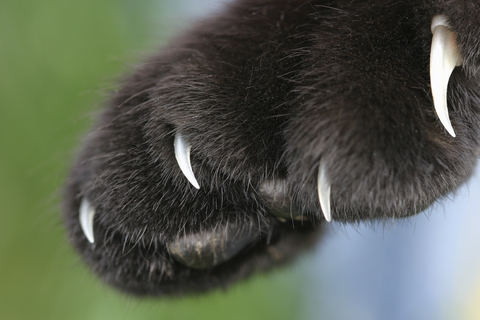
Scratching is a normal feline behavior. Although scratching does serve to shorten and condition the claws, other important reasons why cats scratch are to mark their territory (both visibly and with the scent of the foot pads) and to stretch. Some cats may increase their territorial marking (e.g. scratching, urine marking) in situations of anxiety or conflict. Cats may also threaten or play with a swipe of their paws.
“Scratching does serve to shorten and condition the claws…”
For cats that live primarily outdoors, scratching is seldom a problem for the owners. Scratching is usually directed at prominent objects such as tree trunks or fence posts. Play swatting with other cats seldom leads to injuries because cats have a fairly thick skin and coat for protection. When play does get a little rough, most cats are pretty good at sorting things out between themselves. Occasionally, rough play or territorial fighting does lead to injuries or abscesses that would require veterinary attention.
Cats that live primarily or exclusively indoors may run into disfavor with their owners when they begin to scratch furniture, walls, or doors, or when they use their claws to climb up, or hang from the drapes. Claws can also cause injuries to people when the cats are overly playful or don’t like a particular type of handling or restraint. With a good understanding of cat behavior and a little bit of effort, it should be possible to prevent or avoid most clawing problems, even for those cats that live exclusively indoors.
How can I stop my cat from scratching?

It is impractical and unfair to expect cats to stop scratching entirely. Cats that go outside may be content to do all their scratching outdoors, but the urge may still arise when the cat comes back indoors. Cats that spend most of their time indoors will need outlets for their scratching and marking behaviors. If you don’t provide appropriate outlets for your cat, don’t be surprised if you come home to find objects strewn all over the floor, scratches on your furniture, and your cat playfully climbing or dangling from your drapes. While it may not be possible to stop a cat from scratching, it should be possible to direct the scratching, climbing and play to appropriate areas indoors. Building or designing a user friendly scratching post, providing a regular daily routine of social play, object play and exercise, and keeping the cat away from potential problem areas will usually be adequate to deal with most scratching problems. Further details on providing an enriched indoor environment and encouraging appropriate play are discussed in separate handouts.
How do I design a scratching area for my cat?
Since cats use their scratching posts for marking and stretching as well as sharpening their claws, posts should be set up in prominent areas, with at least one close to the cat’s sleeping quarters. The post should be tall enough for the cat to scratch while standing on hind legs with the forelegs extended, and sturdy enough so that it does not topple when scratched. Some cats prefer a scratching post with a corner so that two sides can be scratched at once while other cats may prefer a horizontal scratching post. Special consideration should be given to the surface texture of the post. Commercial posts are often covered with tightly woven material for durability, but many cats prefer a loosely woven material where the claws can hook and tear during scratching. Remember that scratching is also a marking behavior and cats want to leave a visual mark.
“Be certain to use a material that appeals to your cat.”
Carpet may be an acceptable covering but it should be combed first to make certain that there are no tight loops. Some cats prefer sisal, a piece of material from an old chair, or even bare wood for scratching. Be certain to use a material that appeals to your cat.
How can I get my cat to use its post?
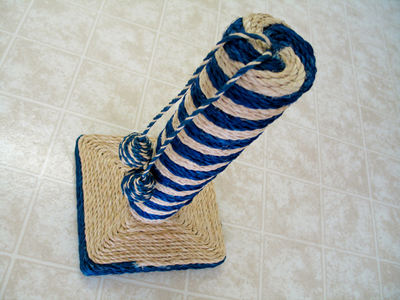
Placement is important when trying to entice your cat to use a scratching post. Because scratching is also a marking behavior, most cats prefer to use a post that is placed in a prominent location. It may be necessary to place the post in the center of a room or near furniture that the cat was trying to scratch until the cat reliably uses it and then move it to a less obtrusive location.
Even after you move it, the post may need to remain in the room where the cat spends a great deal of time and wishes to leave its “message”. A good way to get the cat to approach and use the post is to turn the scratching area into an interesting and desirable play center. Perches to climb on, space to climb into, and toys mounted on ropes or springs are highly appealing to most cats. Placing a few play toys, cardboard boxes, catnip treats, or even the food bowl in the area should help to keep the cat occupied. Sometimes rubbing the post with tuna oil will increase its attractiveness. Food rewards can also be given if the owner observes the cat scratching at its post. Products have been designed to reward the cat automatically by dispensing food rewards each time the cat scratches. It may also be helpful to take the cat to the post, gently rub its paws along the post in a scratching motion, and give it a food reward. This technique should not be attempted, however, if it causes any fear or anxiety. For some cats, multiple posts in several locations will be necessary.
What can I do if the cat continues to scratch my furniture?
Despite the best of plans and the finest of scratching posts, some cats may continue to scratch or climb in inappropriate areas. In these cases, the first step is to determine whether the scratching is excessive and whether anxiety is a factor. Scratching of new areas and sites may be related to anxiety and marking behavior. Sometimes, the scratching problem is related to a change in the household such as the introduction of a new cat, moving or a change in the family’s schedule. Other signs of anxiety such as a change in appetite, a change in social behavior (e.g. more aggressive or more withdrawn), or the onset of urine marking may also occur. When, where and how often the cat scratches might be a clue as to the possible cause. If the cat is not satisfied to scratch in one or two selected areas, then look at the environmental and household factors that might lead to anxiety. If the cat scratches new objects or furniture in the home, this might be a marking behavior. Cats that scratch in a particular room or on a particular person’s possessions may have a relationship problem that might need to be resolved. Providing the cat with a more enriched daily routine, including multiple feeding sessions, additional opportunities for social / predatory play, and new objects to manipulate and explore, may help to better settle the cat at times when it might otherwise be scratching. In addition to determining the cause and trying to resolve the underlying anxiety, the feline facial pheromone FeliwayTM may be useful to reduce marking when sprayed on the inappropriate locations (but should not be used to deter normal marking of preferred scratching sites).
If the scratching is not anxiety related, but the targets of scratching are undesirable for the owner, a little time, effort, and ingenuity might be necessary. The first thing to consider is partial confinement or “cat-proofing” your home when you are not around to supervise. If the problem occurs in a few rooms, consider making them out of bounds by closing off a few doors or by using child-proofing techniques such as child locks or barricades. The cat may even have to be kept in a single room that has been effectively cat proofed whenever the owner cannot supervise. Of course the cat’s scratching post, play center, toys, and litter box should be located in this cat-proof room.
If cat-proofing is not possible or the cat continues to use one or two pieces of furniture, you might want to consider moving the furniture, or placing a scratching post directly in front of the furniture that is being scratched. Take a good look at the surfaces of the scratched furniture and ensure that the surface of the post is covered with a material similar to those for which the cat has shown a preference. Some scratching posts are even designed to be wall mounted or hung on doors. Placing additional scratching posts in strategic areas may also be helpful for some cats. Another option is to try using a feline facial scent on scratched surfaces. This may help to reduce scratching at these sites but the cat will still need alternate areas to scratch. Keeping the cat’s nails properly trimmed or using commercially available plastic nail covers are also useful techniques for some owners.
How do I punish my cat for inappropriate scratching?
All forms of physical punishment should be avoided since they can cause fear or aggression toward the owners, and at best, the cat will only learn to stop the scratching while the owner is around. Indirect, non-physical forms of punishment may be useful if the owner can remain out of sight while administering the punishment. In this way the cat may learn that scratching is unpleasant even when the owner is not present. Water rifles, ultrasonic or audible alarms, or remote controlled devices are sometimes useful.
“All forms of physical punishment should be avoided since they can cause fear or aggression…”
Generally, the best deterrents are those that train the pet not to scratch, even in the owner’s absence. If the surface or area can be made less appealing or unpleasant, the cat will likely seek out alternative areas or target for scratching, (hopefully acceptable scratching posts). The simplest approach is to cover the scratched surface with a less appealing material (plastic, a loosely draped piece of material, aluminum foil, or double-sided tape). Another effective deterrent is to booby trap problem areas so that either scratching or approaching the area is unpleasant for the cat (e.g. motion detector air spray, motion detector alarm, odor repellents or a stack of plastic cups that is set to topple when the cat scratches). (See our handout on ‘Behavior Management Products’). Of course, neither remote punishment nor booby traps will successfully deter inappropriate scratching unless the cat has an alternative scratching area that is comfortable, appealing, well located, and free of all deterrents.
My cat is using her claws to injure family members, what should I do?
The first thing you need to do is determine why the cat feels the need to use her claws. If the cat uses its claws on the owners in play or when climbing onto or jumping off of the owner’s lap, try keeping the nails trimmed, or redirecting the cat to acceptable play behavior. If the cat is anxious, fearful or frustrated, then she may be using her claws to escape. In these cases, it is important to identify and prevent situations in which the cat might use its claws. A more in-depth behavioral assessment is needed to determine why your cat is clawing at family members.
Protecting Your Puppy from the Parvovirus
By Nicole Pajer
The parvovirus attacks the lining of a dog’s digestive system and prevents him from being able to properly absorb nutrients and liquids. Puppies are extremely susceptible to parvo as their immune systems are not fully mature.
Parvo Prevention Methods
The best way to prevent your new puppy from becoming infected with parvo is to make sure that he receives all of his required vaccinations. Puppies should avoid contact with outside dogs and public areas until at least two weeks after their third vaccination.
Common Symptoms of Parvo
- • Diarrhea, blood in stools
- • Lethargy
- • Fever
- • Vomiting
- • Severe weight loss
- • Loss of appetite
If you recognize any of the above symptoms in your new puppy, rush him immediately to the vet. Early detection can significantly increase the odds of the dog surviving and can help to minimize the amount of hospitalization as well as medical bills associated with treatment.
-
Archives
- February 2012 (1)
- December 2011 (2)
- November 2011 (1)
- October 2011 (3)
- September 2011 (3)
- August 2011 (5)
- July 2011 (7)
- June 2011 (17)
- May 2011 (12)
- April 2011 (8)
-
Categories
-
RSS
Entries RSS
Comments RSS


